
The main barrier is organisational readiness, not technology. Research shared at Tenity’s Scaling AI in Banking event found that while around 70% of Swiss banks have strong AI ambition, only 10% have a well-defined AI strategy. The gap is cultural and structural: AI adoption requires changes to how organisations manage operations, transformation, and decision-making — not just access to better models.
















From AI Ambition to AI at Scale: What banking leaders are learning now
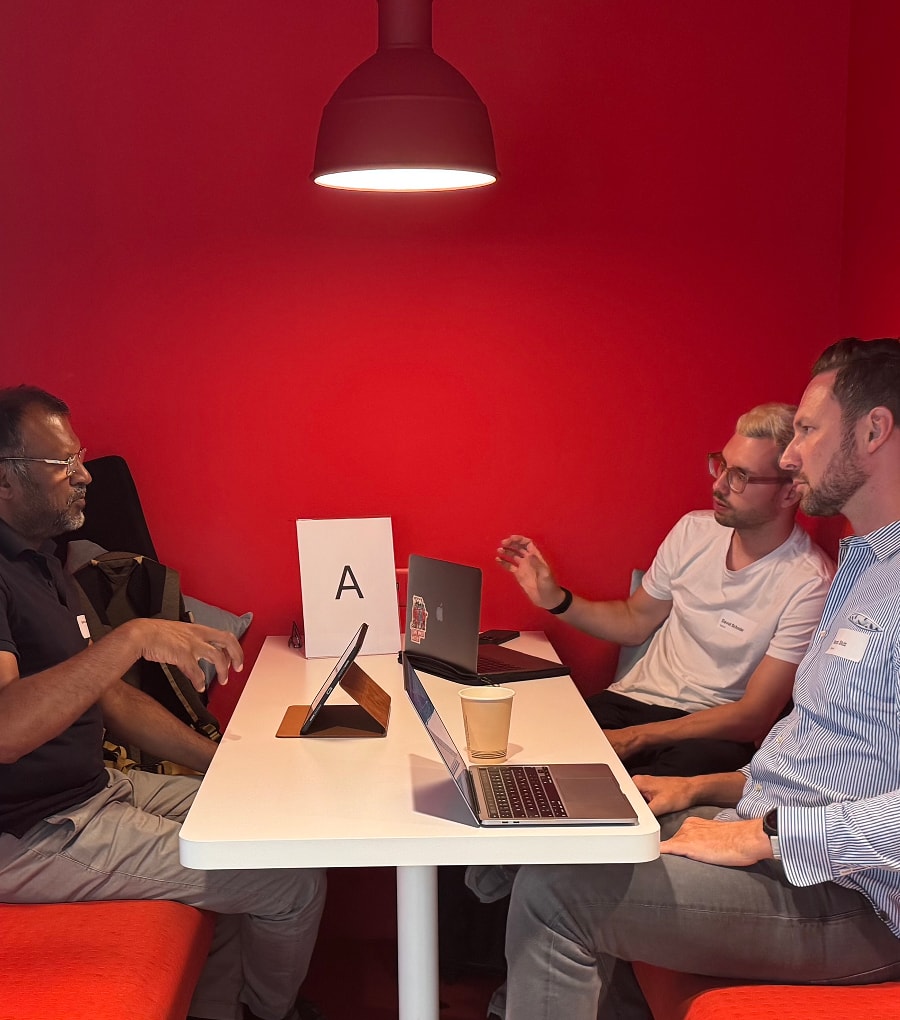
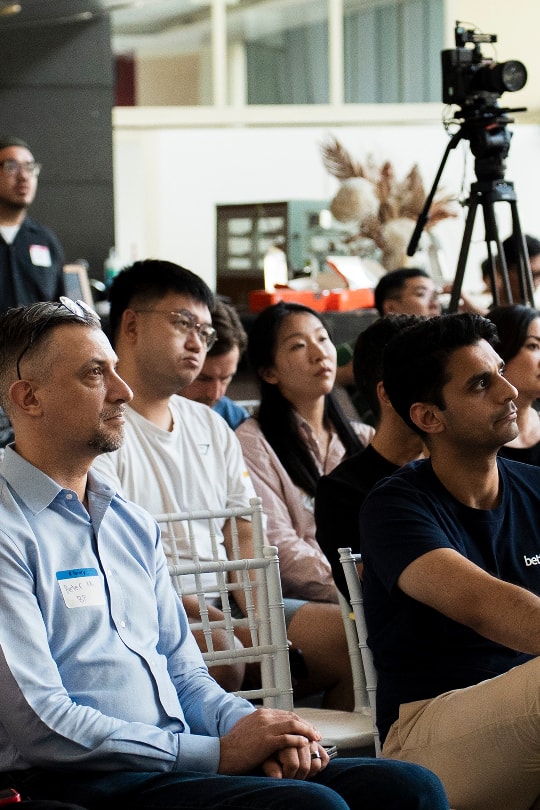
The insights in this article come from Scaling AI in Banking, a Tenity event hosted by Pictet Group in Geneva, where leaders from banking, consulting, venture building, research, and fintech came together to discuss a more mature question than the market was asking a year ago.
Key Takeaways
Most banks have AI ambition but not AI strategy.
A Swiss banking survey presented at the event found that around 70% of banks have strong AI ambition, but only 10% have a well-defined AI strategy — making organisational readiness, not technology, the primary barrier to scale.
The real blocker is people, not models.
Scaling AI inside a bank requires a full transformation programme: skilled teams, production-grade infrastructure, and governance frameworks that allow successful pilots to be safely repeated across the business.
Competitive advantage comes from vertical depth, not horizontal breadth.
Generic AI layers built on shared foundation models won’t differentiate institutions. The strongest opportunities — and the ones attracting the most investment — are narrow, workflow-specific applications trained on proprietary data.
Market intelligence is already moving into AI-parsed chat.
Bid-ask spreads in broker chat messages are up to 25 times tighter than on public market data platforms, with price movements appearing there five to seven minutes before Reuters or Bloomberg. Traders who miss these signals are operating with a structural information disadvantage.
The debate is no longer whether AI matters for banking. It does. The harder question now is what comes next: how institutions move from pilots, experimentation, and internal productivity wins to AI adoption that is measurable, governed, and built to last. Across contributions from Pictet Group, KPMG, Tenity, the ETH AI Center, InvestSuite, Aisot Technologies, and TwoWay, one message came through clearly: banking has moved beyond AI awareness and is now focused on effective execution.
Banking moves beyond AI ambition to effective execution
Pictet Group framed that shift immediately. Martin Kunz, Group CTO, Pictet Group, opened the event by highlighting how Pictet is not merely monitoring GenAI developments but taking concrete action: “Our engineering centres are engaged in advanced experimentation, and we are actively developing AI coding agents to enhance our software engineering practices. We recognise there are constraints and risks, and we need to implement the right guardrails – but this is a very exciting change.”
That distinction set the tone. This was not a discussion about AI as an abstract innovation theme. It was a discussion about what it takes to make AI work inside a live banking environment.
That execution gap surfaced clearly in the panel discussion. Jérôme Laville, KPMG, shared findings from a Swiss banking survey showing that “around 70% of the banks have strong ambition with AI, but in reality only 10% have a well-defined AI strategy.” The statistic matters because it captures the real state of the market: institutions are interested, engaged, and increasingly active, but only a small minority have translated that momentum into a defined operating strategy. Laville’s second point was even more revealing. The real blocker, he argued, is not simply technological maturity but organizational readiness: “There’s a lot of resistance coming from people. It’s a complete change in the way your organization is actually managing their operations, managing their transformation.” In banking, AI has evolved beyond being just a model problem — it is now an exciting opportunity for transformation.
Strategy alone is not enough. Scale needs infrastructure and governance.
Pictet Group’s own contribution reinforced that point from the inside. Steve Blanchet, Head of Group Technology Strategy and Innovation, Pictet Group, acknowledged that expert teams are essential in a field moving this quickly, but he was equally clear that expertise alone does not create enterprise impact. “You need the business and the product managers to understand what is this new art of the possible with AI. Then you need tech to be able to deliver this technology within concrete use cases and to do this in a scalable way. All of this points to a transformation programme.” For Blanchet, scale depends on something more structural: people, infrastructure, platforms, and governance. Banks scale AI by building the conditions under which successful experiments can be repeated, supervised, and adopted safely across the business.
The strongest opportunities are becoming more vertical
That is also why the strongest opportunities discussed during the event are not horizontal applications. They are vertical. Luca Casuscelli, Managing Partner, Tenity, argued that market momentum is increasingly moving into specialized applications built on proprietary data rather than generic AI layers. He described the shift directly: “Now the money is quickly flowing into highly specialized vertical applications,” adding that “true competitive moat comes from proprietary data and how you train your own models based on that data”.
In banking, that logic is especially powerful. Competitive advantage is unlikely to come from using the same foundation models as everyone else. It is more likely to emerge in narrow, repeated, high-value workflows where data, context, and integration matter more than novelty. Casuscelli also pointed to the labour implications of that shift, arguing that a large share of banking work is still rule-based and operational, and therefore highly exposed to redesign through AI-enabled orchestration rather than simple automation.
Real banking AI is not generic. It lives inside specific workflows.
The startup demos gave that argument real shape. In trading, Chirine BenZaied-Bourgerie, Co-Founder and CEO, TwoWay, described a problem that is deeply specific to market workflows but easy to understand once stated: traders are inundated with broker messages, and meaningful information gets lost inside them. “Traders have been telling us that they receive hundreds of chat messages from their brokers every hour, thousands every day. And the challenge for them is that they miss about 80% of these chat messages”.
Her case for AI was not framed as generic efficiency. It was framed as market intelligence extraction. Later, she put it even more sharply: “The market is actually happening in the chats”. She supported this with benchmark data showing bid-ask spreads 25 times tighter in chat messages than on market data platforms, with price movements appearing there five to seven minutes before Reuters or Bloomberg reflect them. That is what vertical AI looks like in practice: not a broad claim about transformation, but a precise intervention in a high-friction workflow where value is already leaking.
Aisot approached the same theme from the investment side. Stefan Klauser, CEO, Aisot Technologies, argued that real decision support in finance is much harder than simply combining a model with market data. “You need to have access to the relevant data sources from markets, from alternative news. You need to have fundamentals. You need to have company information. You need to process that in real time and you need to link it to your specific portfolios, investment strategies, to your targets and restrictions in your specific setup. And that has to be turned into decision-ready insights” That line gets to a central truth about enterprise AI in finance: insight only becomes valuable when it is grounded in the actual portfolio, actual mandate, and actual constraints of the institution using it. Klauser reinforced the same idea during the panel when he warned against naïve deployment of general-purpose systems, insisting that “you cannot just work with out-of-the-box models”
That need for contextualization also surfaced in wealth management, though in a different form. William Ferrand, Chief Revenue Officer, InvestSuite, described the weakness of traditional reporting with an elegant line: “It looks back, it tells me the what, but not the why”. That distinction matters because it clarifies where AI can be genuinely useful in advisory. The opportunity is not just to accelerate report production. It is to help turn portfolio information into explanation, narrative, and preparation that improves the quality of client interaction. In private banking, that is not a minor caveat. It is the difference between a useful assistant and an unusable system.
The real business test is still ROI
The panel then brought the discussion back to commercial reality. Bart Vanhaeren, CEO and Co-Founder, InvestSuite, cut through much of the market noise with a simple formulation: “Impact has only two words: costs or revenues. […] So until you get that impact, it’s just not yet an ROI”. That line sharpened one of the article’s core themes. Productivity gains matter, but unless they translate into lower cost-to-serve, stronger conversion, better retention, or higher revenue, they remain incomplete as a strategic outcome. Vanhaeren also pushed the advisory question further, arguing that as AI systems absorb more of the analytical and preparatory work, the human layer will become more concentrated around what machines still do not provide well: trust, confidence, judgment, and relationship quality.
Proprietary data, model control, and compliance are becoming strategic
The research perspective added another level of clarity. Daniel Naeff, Head of Innovation & Entrepreneurship, ETH AI Center, framed his role not as research in isolation but as translation into industry application. He also made one of the event’s most important strategic points: in financial services, model choice is no longer just a technical question. It is increasingly a control question.
Speaking about open models, he argued that “because it’s open source and because you can download and run it on prem, it is a safer and more risk-free alternative”. He then offered a metaphor that captured the dependency risk clearly: Building AI applications is like building a house – while everything may look stable on the surface, the real risk lies in the invisible foundation underneath. If that foundation is controlled by someone else, you are ultimately dependent on infrastructure you neither see nor govern.
Naeff was equally frank about the present limits of AI in finance, noting that “at the moment, there is no killer application available that you can […] simply deploy in financial services” and that high performance on real financial tasks will require proprietary data: “A model that would perform very well or extremely well within certain financial tasks would need as well to be trained on proprietary and private data”. Together, those remarks pushed the conversation beyond hype and toward something more durable: control, compliance, and differentiated capability.
Convening the right conversation matters too
The shape of the event itself was part of its value. Brigitta Gyoerfi, Hub Director Zurich, Tenity, moderated the panel and steered the conversation toward the harder question of scale, explicitly framing the panel around what it really takes to deploy these solutions inside financial services. That mattered because it kept the conversation anchored in the real issues: governance, trust, integration, architecture, and change.
Key takeaways from Scaling AI in Banking
- Banking has moved beyond AI awareness. The real challenge is now execution.
- Ambition still exceeds readiness. Many institutions want AI, but far fewer have a defined strategy and operating model.
- Scaling requires more than models. Infrastructure, platforms, governance, and organizational change are essential.
- The strongest use cases are becoming more vertical. Trading, investment intelligence, and advisory all showed that AI creates most value when it is embedded in specific workflows.
- ROI remains the hard test. Productivity is not enough unless it turns into measurable business impact.
- Proprietary data is becoming a real source of competitive advantage.
- Control and compliance are now core AI strategy questions, not side issues.
The human layer is changing, not disappearing. As systems take on more analysis and preparation, human value becomes more concentrated around trust, judgment, and relationships.
From conversation to execution
Taken together, the event offered a more mature picture of banking AI than the market often does. The challenge is no longer proving that AI can do something interesting. It is deciding where it creates measurable value, what needs to be built around it, and how institutions change without losing control. The strongest firms will not be the ones that run the most pilots. They will be the ones that can connect experimentation to architecture, architecture to governance, and governance to business outcomes.
That is why the next move from Tenity and Pictet Group feels like a genuine next chapter rather than a follow-up footnote. Tenity announced on March 11, 2026 that, following the Geneva event, it is launching the Pictet Hackathon, a two-day in-person event in Geneva, bringing together 100 to 120 participants to work on real-world financial-services challenges. Tenity described it as the natural next step: moving from conversation to innovation.
And that is exactly why the hackathon matters. The event made it clear that the next phase of banking AI will not be won through abstract enthusiasm, generic copilots, or isolated proofs of concept. It will be won by the people who can solve real problems under real constraints: founders, operators, researchers, and banking professionals who understand that usable AI in finance has to work commercially, technically, and regulatorily at the same time. That is what makes the Tenity x Pictet Hackathon so compelling. It is not promising innovation in the abstract. It is creating a space to test what high-impact, responsible AI in financial services actually looks like.
Tenity’s focus on vertical AI applications. Discover how we invest.
TL/DR
Why do most banks struggle to scale AI beyond pilots?
What does it take to scale AI successfully inside a bank?
Scaling AI in banking requires four things working in parallel: skilled people who understand what AI makes possible, infrastructure capable of supporting production deployments, platforms that allow safe experimentation at scale, and governance frameworks that let successful pilots be repeated and supervised across the business. Technology alone is not the bottleneck — enterprise-wide transformation programmes are.
Which AI applications offer the strongest competitive advantage in banking?
Competitive advantage in banking AI is shifting away from generic, horizontal applications toward highly specialised vertical tools built on proprietary data. Institutions are unlikely to differentiate by using the same foundation models as their peers. The strongest opportunities lie in narrow, high-frequency workflows — such as trading intelligence, regulatory reporting, and credit risk — where proprietary data and deep workflow integration create moats that generic AI cannot replicate.
How is AI being used in trading and capital markets today?
One active application is extracting market intelligence from broker communication channels. Research cited at Tenity’s Geneva event found that traders receive hundreds of broker messages per hour, yet miss around 80% of them — and that bid-ask spreads in chat messages are up to 25 times tighter than on public market data platforms, with price movements appearing there five to seven minutes before Reuters or Bloomberg reflect them. AI systems that parse these communications in real time give traders a structural information advantage.